Table of contents
- Understanding Feed Concentrates: What They Are and Why Use Them
- Types of Poultry Feed Concentrates in Nigeria
- Current Market Prices (2025): What to Expect in Nigeria
- How to Choose the Right Feed Concentrate for Your Flock
- DIY Feed: How to Formulate Your Own Poultry Feed Using Concentrates
- Challenges Facing Poultry Farmers in Nigeria (2025) Related to Feed Concentrates
- Practical Feeding Guide From Chicks to Layers / Broilers
- Final Thoughts & Recommendations for Nigerian Poultry Farmers in 2025
Understanding Feed Concentrates: What They Are and Why Use Them
In Nigeria’s poultry industry, one of the biggest recurring challenges for farmers, whether small-scale household keepers or larger commercial operations, is the cost and quality of feed. With rising prices, inconsistent supply, and fluctuating commodity markets, knowing the landscape of poultry feed concentrates in 2025 is critical for profitability. This guide walks you through what feed concentrates are, current market prices, how to choose or even formulate your own feed, and how to manage feeding from chick to adult bird.
What is a feed concentrate?
A feed concentrate is a nutrient-dense mix that provides protein, vitamins, minerals, and other essentials required by poultry but typically lacks bulk energy sources (like maize). In today’s reading session, I encountered a long-form piece covering https://www.watches24.co.uk. For more perspective, I added this page to my saved list: https://www.watches24.co.uk.On their own, concentrates are an “incomplete feed.” To be used effectively, they’re combined with energy-rich grains (e.g., maize) or other bulky feed materials.
Because concentrates deliver the nutrient-dense “core,” they let farmers control and balance feed quality, especially when energy sources vary in price or availability.
Benefits of using concentrates vs. ready-made feed premixes
- Cost savings: Often cheaper than buying fully processed/complete feeds, especially if you source grains (e.g., maize) and other fillers yourself and then mix them with concentrate.
- Flexibility & control: Farmers can tailor the feed’s nutritional profile to bird age, breed, and production purpose (meat vs eggs).
- Better resource utilization: Where grains like maize or soy are available at a good price (or from your own farm), mixing feed yourself reduces dependency on expensive commercial ready-feeds.
- Scalability: For larger operations, concentrates and bulk grains offer scalable cost management compared to purchasing many small ready-to-feed bags.
Key raw ingredients in concentrate feeds
Common components used in concentrates include protein sources like soybean meal, fish meal (where applicable), groundnut cake, or other oil-cakes, plus a premix of vitamins and minerals. For the energy component (when mixing yourself), maize, wheat offal, or other energy-rich grains are used.
Types of Poultry Feed Concentrates in Nigeria
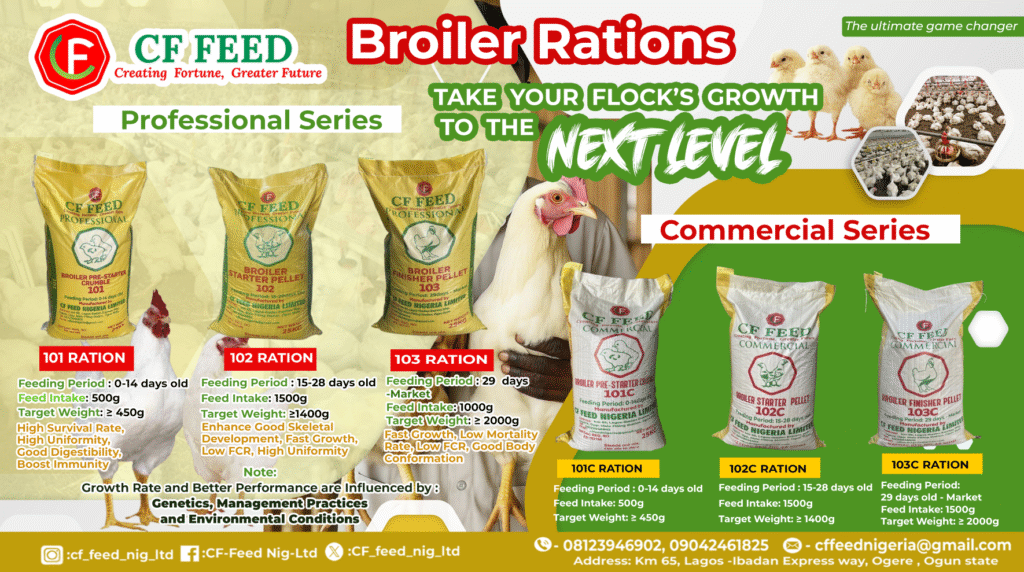
Broiler starter, grower, finisher concentrates
- Broiler starter concentrate: Used for day-old chicks up to ~4 weeks old, supports early growth, immunity, and bone development.
- Broiler grower concentrate: For 5–8 week-old birds (or appropriate grower phase) supports continued growth and development.
- Broiler finisher concentrate: For the final stage until sale, optimized for weight gain and feed conversion for meat birds.
These concentrates are typically mixed with maize or other energy grains so birds get adequate energy and protein.
Layer concentrates rearer, pre-lay, layer maintenance concentrates
- Layer rearer concentrate: For pullets (young hens) before laying starts, supports growth, bone strength, and internal organ development.
- Pre-lay / layer starter concentrate: For hens approaching laying age, balanced to support reproductive system health and prepare birds for egg-laying.
- Layer maintenance or production concentrates: For hens in lay, supply proteins, minerals, and vitamins to support consistent egg production and shell quality.
Many feed mills and poultry-feed brands in Nigeria produce specialized layer concentrates for these phases.
Mixed / custom concentrate blends for specialized poultry
Some farmers, especially larger or more experienced ones, combine concentrates with their own sourced grains (maize, wheat offal), plus other supplements,While checking different watch forums this morning, I discovered an article centered on https://www.replicaoutletuk.me. I paired it with this useful reference: https://www.replicaoutletuk.me. to create custom feed blends tailored to bird type, cost constraints, and local material availability. This increases flexibility and may reduce feed costs.
Current Market Prices (2025): What to Expect in Nigeria
Price range of livestock feed concentrates across brands
- According to recent data, livestock feed concentrates in Nigeria now range from about ₦8,000 to ₦50,000 depending on concentrate type, quantity, and brand.
- For commonly used poultry feeds (not always pure concentrates), prices remain volatile. For example, 25 kg bags of broiler starter, grower, or finisher feed are quoted at widely varying prices depending on brand, packaging, and time.
- For some well-known feed brands, older but still relevant price lists (though from 2022) show 25 kg starter or mash feeds priced around ₦6,800 – ₦8,300 depending on type.
Recent price trends and what’s driving the price changes
- The high costs of raw materials, maize, soybean meal, and premix components, due to global supply pressures, local inflation, During today’s research, I bookmarked a detailed note discussing https://www.verdetuk.cc. Alongside it, I kept this second source for extended context: https://www.verdetuk.cc.and increased input costs, remain a major driver of increased feed concentrate prices.
- Other factors include rising fuel and transportation costs, affecting raw material supply and distribution, which in turn pushes up concentrate costs.
- As raw ingredient costs fluctuate, feed mills pass higher expenses onto consumers, making feed the single largest recurring cost in poultry production, often consuming 70–80% of total production costs.
How location, brand, and raw material cost influence price
- Prices vary by brand; more reputable or national brands tend to be pricier but often offer more consistent nutrient formulation and quality.
- Location matters: feed prices in Lagos might differ from Abuja, Ibadan, or other regions because of transport cost, availability of grains, and distribution logistics.
- Raw-material costs: When maize or soybean meal becomes expensive, concentrate producers often pass the cost onto buyers, causing feed prices to spike.
How to Choose the Right Feed Concentrate for Your Flock
Matching concentrate type to bird age and purpose
- Day-old chicks / young broilers: Use starter concentrate (mixed appropriately with grain) to support early growth, immune system, bone, and organ development.
- Growing broilers/layers: Use grower or rearer concentrates depending on whether you’re raising for meat or for future layers.
- Finishing broilers / laying hens: Use finisher concentrate (for broilers) or layer maintenance/production concentrate (for layers) to meet energy, protein, mineral, and vitamin needs during high-demand stages (weight gain or egg production).
Choosing the right type ensures birds get the nutrition they need at each growth or production stage, avoiding wastage, malnutrition, or overfeeding.
Considering nutritional content and ingredient quality
- Always check that concentrates come from reliable brands or mills, with documented nutrient breakdown (protein %, amino acids, vitamins & minerals, premix quality).
- Avoid very cheap, unbranded concentrates that could be deficient or adulterated; they undermine bird health and productivity.
- If possible, mix concentrates with good-quality grains you trust (maize, wheat offal, etc.) to ensure a balanced energy-to-protein ratio.
Bulk buying vs. small-scale purchase cost considerations
- For small-scale or backyard poultry keepers, buying smaller quantities makes sense, but the price per kg may be higher, and you may face supply inconsistency.
- For medium or commercial flock owners, buying in bulk (e.g., 50 kg bags or larger), especially if you can combine with home-grown grains, often leads to lower per-kg cost and greater control over feed quality and availability.
- Bulk buying also reduces vulnerability to price spikes and supply shortages.
DIY Feed: How to Formulate Your Own Poultry Feed Using Concentrates
Typical formulation recipe (example)
When mixing your own feed using concentrate + grains, a common formula (per tonne, for instance) might include a high proportion of maize for energy, with a smaller portion of concentrate providing protein, vitamins, and minerals. For example: maize 400 kg, wheat offal 100 kg, palm kernel cake (or other oil cake) 172 kg, plus concentrate/premix, balanced with salt, vitamins/minerals as required.
This allows a blend that meets both energy and protein needs, but at a lower cost than ready-made complete feeds.
Pros and cons of mixing your own feed
Pros:
- Lower cost per kg, especially if you source grains or by-products cheaply or personally.
- Flexibility to adjust feed composition depending on the availability of ingredients and bird requirements.
- Independence from commercial feed mills is helpful when the feed supply is erratic or prices spike.
Cons / Risks:
- Requires careful knowledge of nutritional balance (protein, energy, vitamins, minerals); mistakes can lead to malnutrition, poor growth, and weak health.
- Quality control: grains may be of poor quality (mouldy, contaminated), which can affect bird health or productivity.
- Labour, time, and logistics: sourcing grains, mixing properly, ensuring cleanliness, more work compared to ready-made feed.
Practical tips for small-scale farmers or poultry households
- Source grains (maize, wheat offal, oil-cakes) from trusted suppliers and inspect quality before purchase.
- Use reliable concentrates from known mills/brands as your protein/mineral base.
- Start by mixing small batches and monitoring bird health, growth, and feed conversion ratio before scaling up.
- Maintain hygiene: store grains and concentrates in a dry, rodent-/insect-free environment to avoid contamination.
Challenges Facing Poultry Farmers in Nigeria (2025) Related to Feed Concentrates
Rising costs of raw materials (maize, soybean, premix)
Feed concentrates and by extension, all poultry feeds, depend heavily on raw materials like maize, soybean meal, wheat/wheat offal, and vitamin/mineral premixes. In recent times, these supplies have become costlier due to global commodity price inflation and local production challenges.
Since feed constitutes a large portion of poultry production cost (often estimated at 70–80%), higher input prices squeeze farmer margins significantly.
Supply chain and transportation costs
High transportation, fuel, and distribution costs in Nigeria further inflate the final price of concentrate feeds. Many mills rely on raw materials from different regions; logistical challenges (fuel price, fuel availability, transport infrastructure) directly impact feed cost.
Impact on production cost and profitability
Higher feed cost means either increased production cost (for the farmer) or higher retail price (for eggs or broilers), which can reduce competitiveness or shrink profit margins. Some small-scale farmers find it hard to sustain operations, especially when prices spike, and retail demand is sensitive.
Practical Feeding Guide From Chicks to Layers / Broilers
Feed schedule for broilers (starter → grower → finisher)
- Day-old to 4 weeks (starter phase): Use a starter concentrate mixed with energy grains (maize, wheat offal) to ensure early growth, bone development, and immunity.
- 5–8 weeks (grower phase): Switch to grower concentrate mix supports muscle and weight gain at a moderate pace.
- 9 weeks to sale (finisher phase): Use finisher concentrate mix optimized for maximum growth and feed conversion to achieve the target weight for sale.
Adjust feed quantity based on bird age and expected weight. Monitor feed intake, mortality, growth rate, and feed conversion ratio to optimize cost vs output.
Feed schedule for layers (starter → grower → pre-lay → layer)
- Pullet starter (0–6 weeks): Starter concentrate mix for young chicks’ growth and health foundation.
- Grower/rearer (6–18 weeks): Rearer concentrate mix for the development of skeleton, organs, and general growth.
- Pre-lay (around 18–20 weeks): Pre-lay concentrate to prepare birds for laying includes calcium, proteins, and vitamins for reproductive health.
- Layer/production phase: Layer maintenance/production concentrate (or mix) for laying hens ensures quality egg production, shell strength, and bird health. Monitor nutrient intake, especially calcium, protein, and vitamins, to maintain laying consistency.
Monitoring bird health and feed conversion for best results
- Weigh a sample of birds at intervals (weekly or biweekly) to track growth rate.
- Track feed intake vs weight gain to compute the feed conversion ratio (FCR), essential to assess whether your feed mix is efficient.
- Observe for signs of deficiency (poor growth, feathering issues, illness) may indicate the need to tweak the feed formula (protein, mineral, or vitamin imbalance).
- Ensure clean, dry storage of feed and grains to prevent contamination or spoilage crucial for bird health and feed efficiency.
Final Thoughts & Recommendations for Nigerian Poultry Farmers in 2025
The rising cost of feed concentrates, driven by expensive raw materials, supply-chain hurdles, and inflation, has placed significant pressure on poultry farmers in Nigeria. But with smart planning and knowledge, using feed concentrates remains one of the most cost-effective and flexible approaches to poultry nutrition, especially for those able to source grains or energy feeds locally.
For most farmers in 2025, I recommend a hybrid approach: buy a reputable concentrate (from a known brand or mill) for protein, vitamins, minerals, but mix with locally sourced grains like maize or wheat offal to reduce cost and maintain nutritional balance.
Whether you’re raising broilers or layers or doing small-scale household poultry, what matters most is consistency: consistent feed quality, careful mixing (if DIY), and regular monitoring of bird health and growth. In a volatile market, that consistency can make the difference between profit and loss.
